No Deal, No Relief
28/9/26 US/Global DeskCompetition for CapitalIwo Wojcik Week: S&P +1.21%, Nasdaq +3.25%, Dow +0.03%, Russell -0.93%Yields again?
Seems like yields have been the topic of discussion for forever now, but the U.S. 10-year yield
just keeps on climbing higher. The bond market has stopped trading off crude alone. Strong growth (this week's PMI showed business activity at its fastest pace since 2021), further Fed tightening, and competition for capital (lots of borrowers are trying to attract the same pool of money from investors) are holding rates up even as oil falls. Why?
We saw the trigger on Wednesday when S&P Global released their flash PMI, which came in at
58.4, a 62 month high . 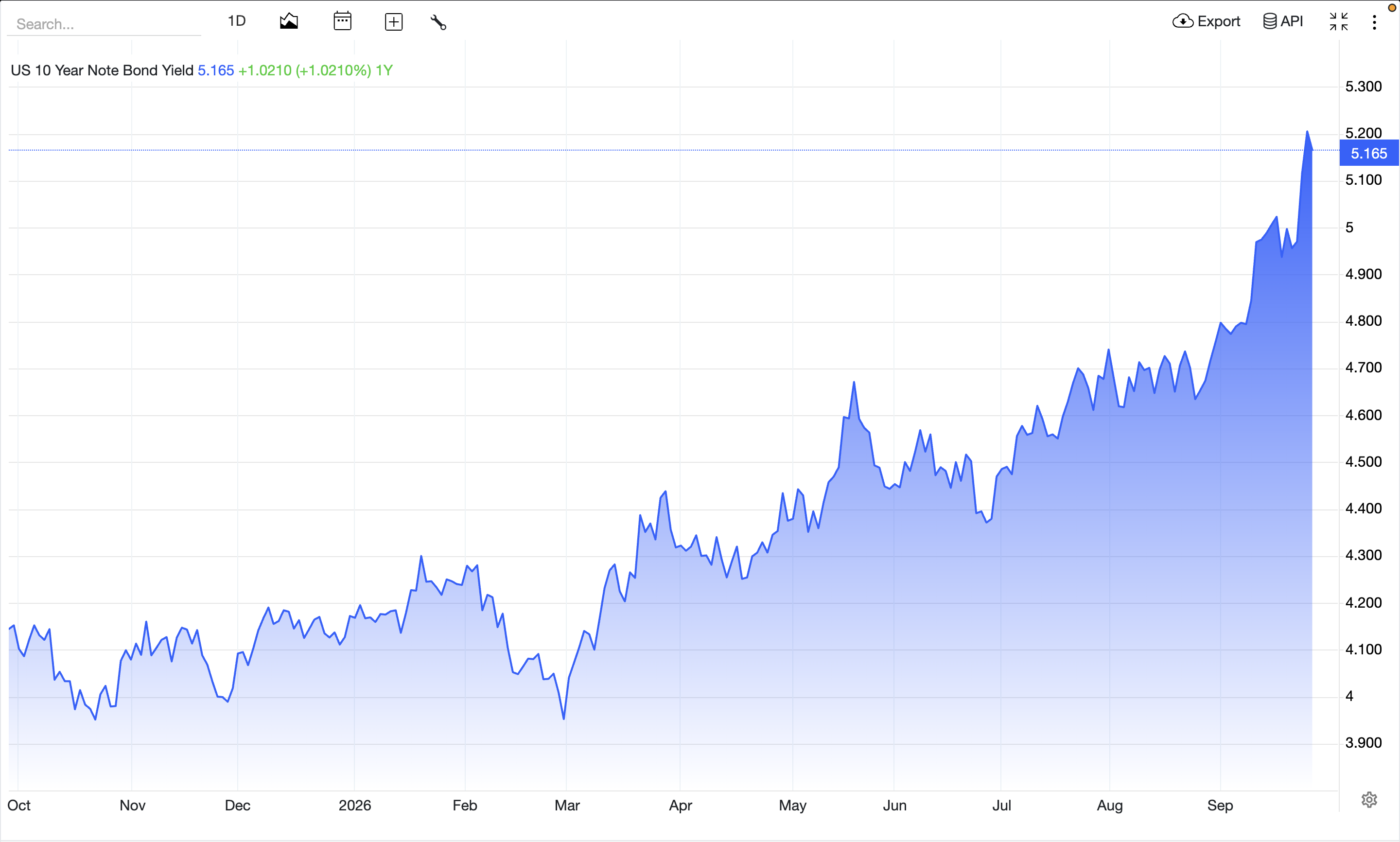
US 10 Year Note Bond Yield- Trading Economics Other key things in the report:
US equities The Nasdaq gained 3.25%, while the S&P gained 1.21%, the Dow was almost flat. The Russell 2000 fell 0.93%. Same pattern as last week: normally, higher yields should put pressure on growth stocks, but big tech continued to outperform anyway. Higher yields may not affect them as much as small caps due to them being exposed to fixed-rate bonds locked in years ago, compared to small caps having floating-rate loans, the rates move with the market. Global This week we saw Thailand's export growth at a 7-month high coming in at 21.6% year on year. This was mostly driven by electronics and technology-related goods, giving us yet another sign that the global AI and data center cycle is continuously being supported, not just inside the U.S. To add a cherry on top, imports grew even faster, meaning the stronger exports are also helping pull in a larger amount of foreign inputs across the globe. Brazilian and Canadian 10-year yields fell, showing that the rise in global yields is not completely uniform. Canadian yields fell mainly due to investors focusing on weaker domestic demand. UAE/Gulf DeskAnother Week, Another WarHenry de Salis Just as Iran talked peace at the UN, the Houthis opened a new front against Saudi Arabia: the Bab el-Mandeb strait is now closed to Saudi-flagged ships. Don't be fooled, however, as Iran dominates the headlines, business is moving under the surface, and some fundamental shifts occurred in UAE financial markets as IHC restructures, and Qatar launches a new investment division under QIA. 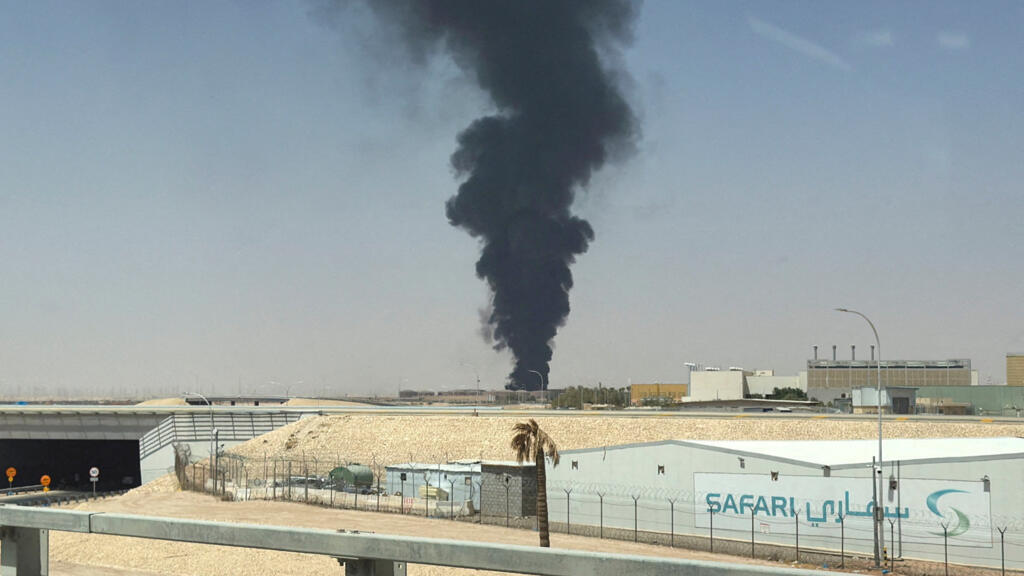
A black plume of smoke rises from King Khaled Int. Airport, Riyadh. Last week. Hormuz Diplomacy Flies and then Crashes The UN General Assembly last Tuesday brought some hope to the matter – that has since been destroyed. US and Iranian negotiators explored a phased deal that would've seen Hormuz re-opened in just seven days. It was a step forward; nuclear talks, waived sanctions, and a ceasefire were all a part of the proposed deal. Saturday night however, Trump rejected the deal:
Regardless, hope isn't dead! Iranian foreign minister, Araghchi, is awaiting a more 'official' response from Washington and that they will not step down from demands. This comes as economic pressure is growing on Iran; Trump thanked the UK, UAE, Turkey, and Oman for introducing economic restrictions on Iran, as the UAE introduced an outright ban on air travel between the two countries as of the 24th. Abu Dhabi: Stocks Tank as IHC restructures The UAE's largest company, International Holding Company (IHC), has been booming; after-tax (yes, the UAE has a 9% corp tax) profits has soared 196% year-on-year. Stock price should be booming, right? Investors are seemingly taking on a bitter attitude to Abu Dhabi, as a high P:E ratio (31) keeps investors on edge. The announcement of a restructuring last week, done to promote long-term equity handover sustainability, sent the stock falling nearly 5%. Broadly, stocks were also seen weaker in the UAE capital after an advisor to Iran's leader warned of potential disruptions to regional air travel and airport services. Qatar turns Inward The Qatar Investment Authority (QIA) introduced a new division last week, Doha Investment, initially responsible for overseeing 45 state-owned enterprises that represent nearly one-third of the fund's total assets. The country is definitely struggling; the closure of Hormuz has made it impossible to export LNG, and Qatar's GDP fell 7% year-on-year in the first quarter of 2026. The Outlook The Middle East is stuck in a 'neither war nor peace' holding state, and last week saw risk spread rather than shrink, as Saudi Arabia now faces pressure on two routes at once. Qatar's gas income is frozen and is dipping into its sovereign fund to support the domestic economy. Despite the investor sentiment this week, the UAE is relatively insulated; energy stocks are benefiting from high oil prices and the property market is holding up. Read online at twodesksnewsletter.com This is not financial advice. Read our disclaimer.
Henry de Salis 
Copyright 2026 Two Desks. All Rights Reserved. |