The Fear Premium
5/10/26 US/Global DeskWhat the Fed can't controlIwo Wojcik US Yields just don't seem to care. The labor market cracked, and the bond market barely shrugged. This week, we had a report on non-farm employment that increased by just 29,000 in September, against the forecast of 89,000. We also had unemployment, which rose to 4.2% from 4.1%. Average hourly earnings also came in well below expectations, rising just 0.1% month on month against the expected 0.3%. At a quick glance, it looks like this is exactly what the Fed needed. A weak labor market combined with lower hourly earnings than expected, this tells the Fed there's less need to keep rates high. This was reflected in the data. The probability of a hike in October plummeted from around 70% to around 14%. But something strange then happened. The 10-year yield initially plummeted and then reversed, closing at 5.281%. On Thursday, it reached 5.34%, the highest level since 2002. The Fed controls overnight rates, but it can't do anything about the price investors want to lend money to the U.S. government for 10 years. Investors are now looking past October and are now focusing on the issues we discussed two weeks ago more than ever plus two more (numbers 4-5).
This is why the data from this week didn't break the bond market. The Fed might not be hiking rates again, but investors are looking at a bigger picture, and we have to ask ourselves: How much more are investors going to demand to lend for the next 10 years? 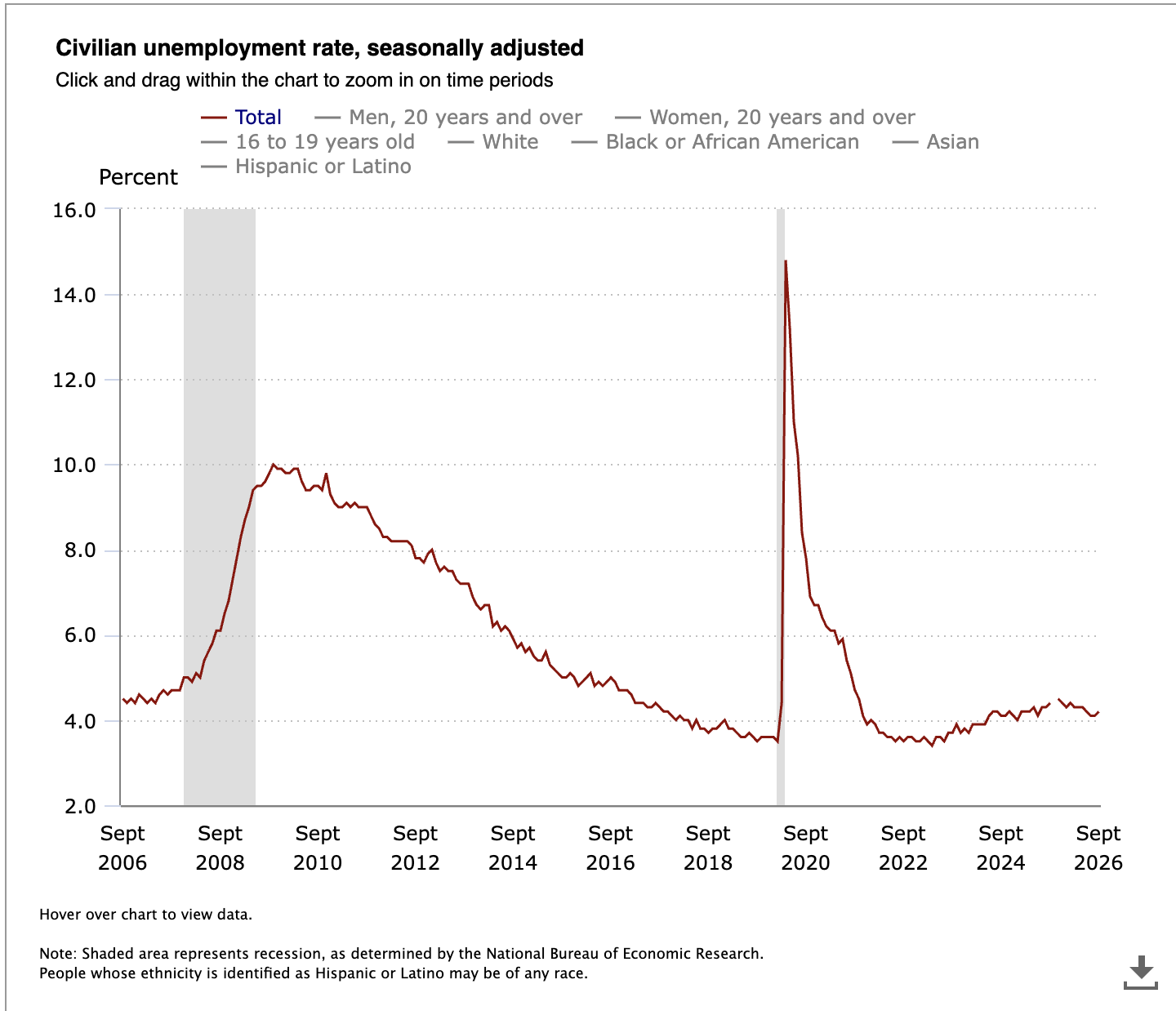
U.S. Bureau of Labor Statistics, Employment Situation, September 2026 US equities S&P +0.73%, Nasdaq +1.00%, Dow +0.49%, Russell +0.70% Green baby. U.S. stocks had a softer interpretation of the jobs report because the expectations of another hike fell from 70% to 14%. It gave investors an excuse to buy. Especially in the more sensitive parts of the market, like the small caps, with the Russell 2000 having its first green week in four weeks. What's funny is that U.S. equities are almost celebrating the news. Global The G7 comes to action. The G7 agreed to release around 100 million barrels of crude and other refined products in order to try to prevent the energy shock from feeding into inflation more than it already has, but that hasn't been reflected. In the bond market, the UK 30-year yield moved above 6%, and the French are also battling rising borrowing costs. It's starting to look less like a U.S. problem and more like a general global repricing of long-term debt. And then there's my favorite of the week: Vietnam. Lots of data coming back. They grew their GDP 9.95% yoy in Q3, and exports jumped 39.1%, but the common trend is that inflation also reached 5.08%. Strong growth, but inflation is still the problem. UAE/Gulf DeskUAE Builds Through itHenry de Salis A terrorist attack on a Flydubai flight rocked Gulf aviation on Wednesday, and added to the cautious sentiment for investors. Across the Gulf, markets are grinding down and are defensive – as Abu Dhabi has now had seven falling sessions in a row and Dubai four. The interesting pattern appearing now is that markets aren't being driven by traditional fundamentals but rather the state of US-Iran talks, which have stalled (hence, the market action). Oil stayed high, but a new train line opened and a big acquisition closed in Abu Dhabi. 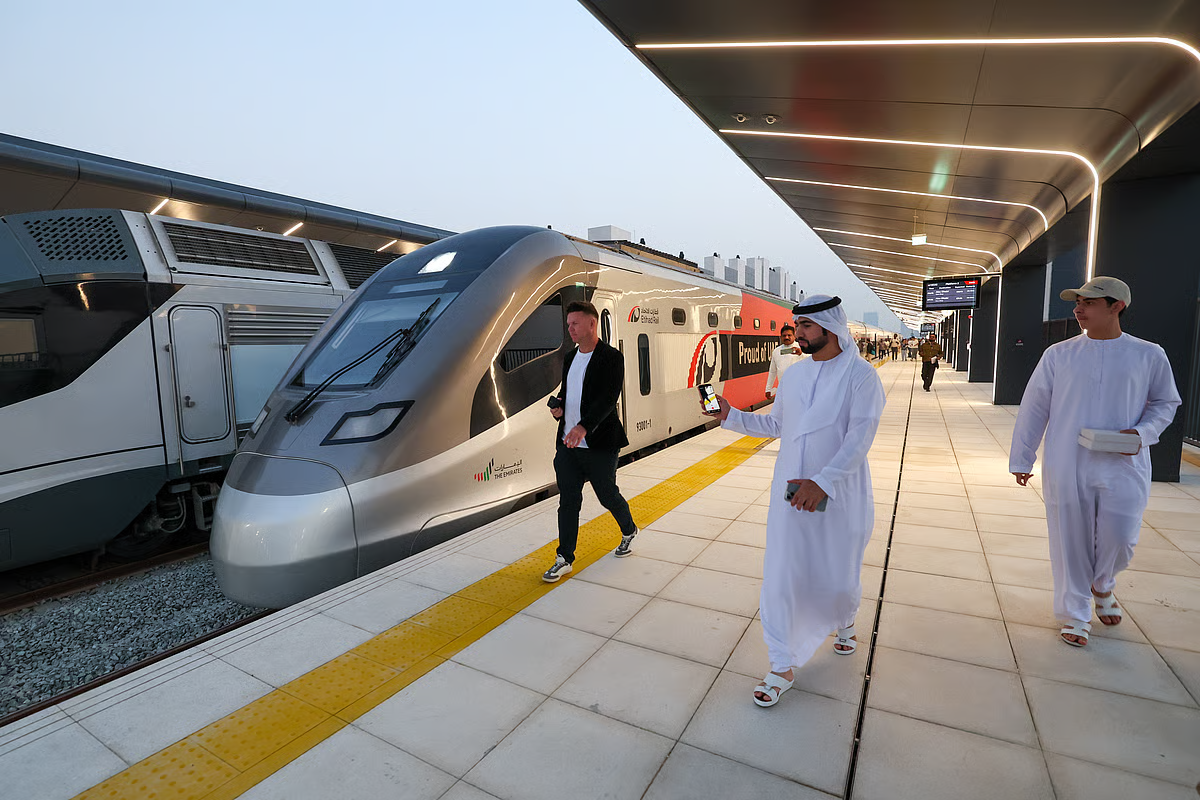
The newly launched Etihad Rail, 2nd of October, 2026. Gulf news UAE Despite regional tensions, and fuel prices rising to their highest this year, the Emirates pushed on with innovation and progress, from satellites to a new rail service. After 17 years, Etihad Rail started its first passenger services from Dubai on the 30th of September, and Sheikh Mohamed bin Zayed rode the line from Abu Dhabi. The journey took about 57 minutes and is integrated with Dubai's payment system. Furthermore, Orbitworks launched what it calls the UAE's first commercial AI satellite, and Emaar reported hotel occupancy recovering, currently at 60%, with prices set to fall only 5% this year. Abu Dhabi Ports closed its biggest deal, with a nearly $1B acquisition of Brazil's CLI port terminals; a clear signal that Abu Dhabi is still expanding abroad. Saudi Arabia & Gulf A drone hit a power station in Medina, according to the Saudi government, although this is denied by the Houthi's spokesperson, knocking out one transformer, but didn't disrupt any of the wider grid. There were also reports of intercepted drones and missiles over Khamis Mushait and Jazan. This is the second front for Saudi now, and really matters for their Red Sea export route. The TASI, Saudi Arabia's stock market index, closed the week 1.65% lower, driven by stalling negotiations between the US and Iran. Qatar's index was also seen broadly lower, driven by the same factors. Waiting on Washington While the east-west pipeline is open once again, overall Gulf exports are still down by a third compared to the pre-war average, and the cost of shipping is elevated due to the Houthis. The entire region is holding its breath, as Kuwait, Bahrain, and Qatar struggle to export reliably, and foreign capital sits patiently outside the region. Every week like this is a week lost; the whole region is watching the US-Iran standoff. Read online at twodesksnewsletter.com This is not financial advice. Read our disclaimer.
Henry de Salis 
Copyright 2026 Two Desks. All Rights Reserved. |