Everything Fell Except Oil
19/10/26 US/Global DeskAI Stirs the PotIwo Wojcik Last week, we saw yields dropping for the first time in five weeks, and I posed the question: whether we're at the top or whether this was just a retracement. Well, this week, we might have got the answer. To start the week off, inflation is back in the room. The September CPI inflation report came in this Wednesday, and it showed prices rising 0.6% on the month, pushing U.S. annual inflation from 3.4% to 3.7% (0.1 percentage point above the 3.6% forecast). Core inflation, stripping out food and energy, rose 0.3% on the month and 2.6% annually, above forecasts both annually and monthly (0.2% monthly, 2.5% annual). Gasoline accounted for more than half of the 0.6% increase in CPI. It jumped 9.1% in a single month. But this is why core mattered more than ever this week. Since it also came in above forecast, you cannot dismiss this print as just petrol, while the energy spike did significant damage. The prices of things such as shelter, medical care, insurance, increased as well. This is also the last inflation report before the midterms, so it's not exactly giving voters confidence about the future outlook. It also squeezes the Fed even more. Wait, so inflation increases, yields should increase, right? That's the common pattern, so why did they fall? What yields did this week might look counterintuitive, and the fact that Brent crude rose 4.28% on the week makes it even more confusing. The 10-year treasury yield dropped 16 basis points this week to around 5.08%. The 30-year yield dropped 17 basis points to 5.42%, and the 2-year yield dropped 7 basis points to 4.715%. 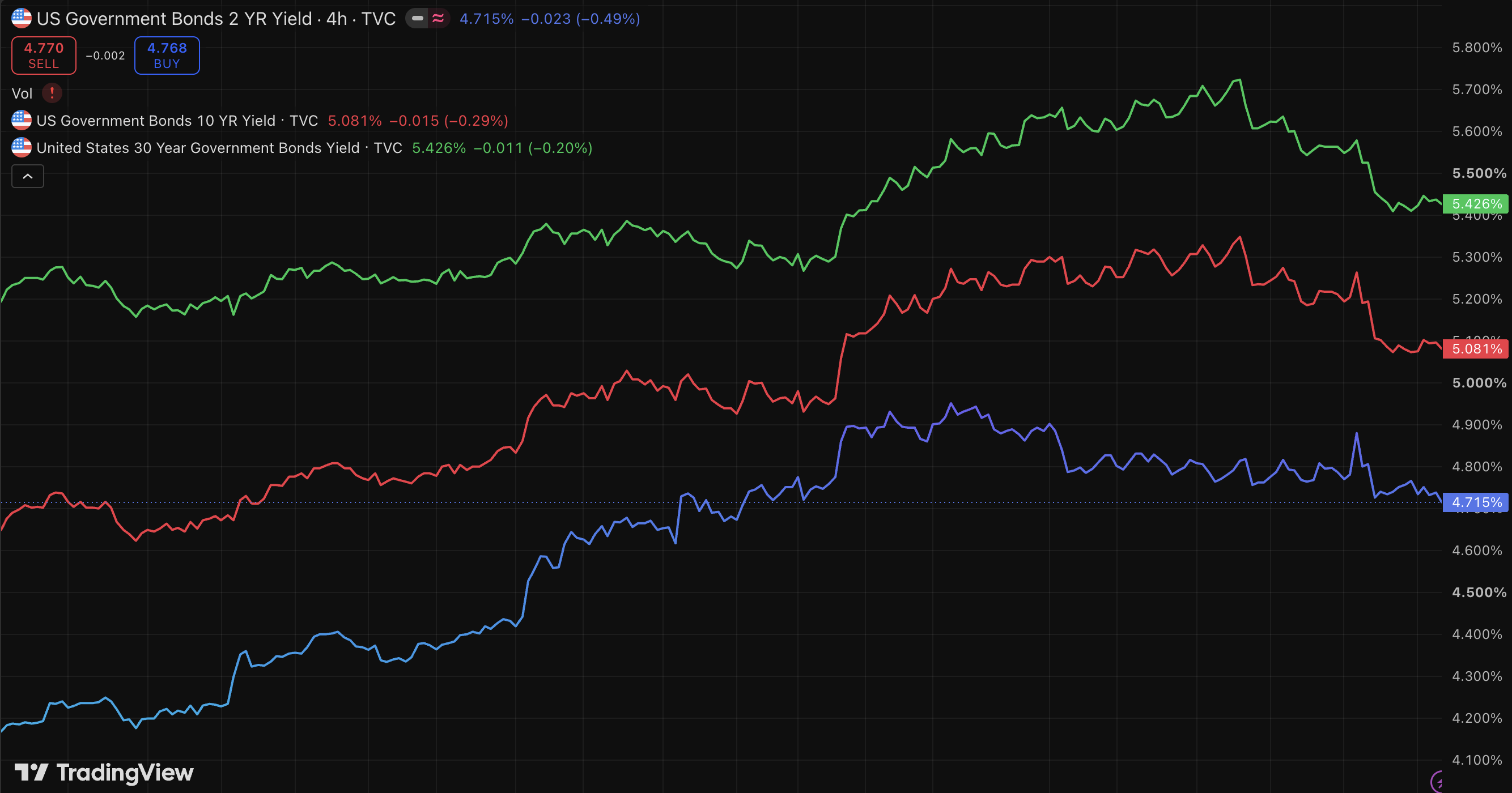
Comparison of US 2, 10, & 30Y yields, Tradingview So what changed? Firstly, in Kevin Warsh's meeting this week he signaled that the Fed was likely to hold in October, which brought the odds of another rate hike down to around 20%. Then AI stirred the pot. This week, investors began moving away from the riskier AI-related companies. As we know from previous issues, these AI companies have been taking out big loans to fund data centers, etc., creating competition for the U.S. Treasuries. But as they fled from the risky AI-related investments, they came back into Treasuries as a safe place to park their money even as oil rose . The caveat, though yields still sit at around 5%, and oil is above $100. One week of yields falling doesn't necessarily mean this is the top of the move, which is why our question "whether we're at the top or whether this was just a retracement" still remains unanswered. US Equities Week : S&P -2.0%, Nasdaq -5.5%, Dow +0.6%, Russell -3% A crack in Nasdaq, this week it fell 5.5%, its worst performance since April 2025. Dow just barely survived, holding above the red zone, with the S&P and Russell both falling. These results give us the story straight – money is moving away from the expensive tech speculative stocks like CoreWeave, whose shares fell 12% on Friday, and towards safer sectors like Health and consumer staples. The main reasons for this is:
Separate from AI, Bank of America didn't enjoy this week before the earnings release on Wednesday; Tuesday hit hard, and it hit with $1.21 billion in penalties due to failures in its anti-money laundering controls and sanctions compliance, which came from US regulators the bank owned up to violating the Bank Secrecy Act failing to report more than 5 billion in suspicious transactions, and then anticipated earnings on Wednesday. They didn't do much to improve the mood. Q3 profit fell around 17% year on year to $6.9 billion so the share shares came under pressure as investors got hit with both the penalty and the weaker than expected performance. Global Aside from oil going above $ 100 per barrel, which Henry has covered more in depth, a couple of key things happened this week, Trump fully waived the Graham Act sanctions (a US-designed law to put economic pressure on Russia) days before they were meant to be put in place in the name of "National interest," killing the planned 500% tariffs on Russian imported goods as well as penalties on countries buying Russian oil. Aside from that, huge protests in France continue, where on Saturday, 17th of October around 550,000 people took part in over 110 marches. This is because two movements merged high school protests over a shortage of teachers and poor facilities, and the yellow vests, an originally grassroots movement about fuel tax and social injustice. UAE/Gulf DeskTwo GulfsHenry de Salis Shockingly to me, it's hard to get paid for oil you can't ship; with oil at a 5-month-high of $110, the Gulf is struggling to ship, and those who can are being rewarded. It was a week where the Gulf's divide continued to be amplified, with the IMF's new report brutally underscoring the region's downturn this year. To add to the good news, the Houthis kept their missiles campaign steady – as the impacts of the terrorist group continue to mount. 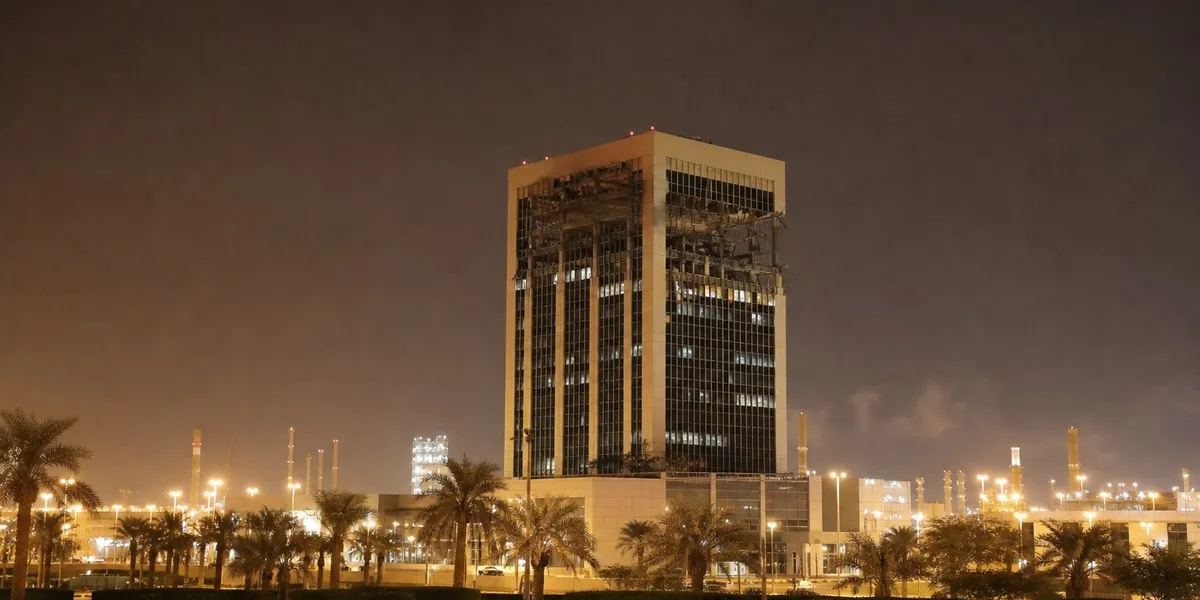
Saudi Aramco HQ in Dhahran, UA News Aramco's Bad Tuesday It wasn't an earnings call, but a missile that made last week gloomy for Saudi Aramco. A Houthi missile struck the Dhahran headquarters and destroyed the three top floors, including the CEO's office. Riyadh's airport was shut throughout the week following last week's strike, leading to a cancellation of something greater than some flights: the EU-GCC Riyadh summit. The world's biggest oil company spent the week working from home while oil shot through the roof. Abu Dhabi Keeps Shopping UAE capital kept moving last week, as Aldar made its first Sharjah purchase of 1,100+ units at AED1.1B. At Mubadala, an Italian telecom tower deal is being circled, all while ADNOC's shipping arm posted a 179% H1 profit jump, as the war boosts charter rates. In markets, Dubai's index even ended the week up 0.8% as a Dubai park developer started pitching what may be the first IPO of the year for the UAE. The Great Divide The IMF decided the broader outlook for the region last week, where the growth gap was brutal. Oman is the only Gulf economy still growing, at 4.1%, while the UAE is at -3.9% and Saudi at -3.3%. Even worse, Qatar and Kuwait are in freefall at -15.6% and -16.7% real GDP growth respectively. Once again, that difference is exit routes, as the last two are dependent on Hormuz for exports; no pipeline, no exports. The UAE's own numbers showed it too, with Q2 GDP down roughly 2%, as the new federal budget for 2027 is slightly smaller than this year's. Gold: the Safe Haven that isn't With all of the global turmoil – missiles hitting Aramco's HQ, oil soaring through $110 – gold has flatlined. It saw the week sitting around $4,100 with fluctuations, and it goes to show a broader trend that has been recurring in this regime: the war pushed oil up, pushing inflation up, pushing rates up. That hurts a metal which doesn't pay any interest. Gold is down just 3.7% for the year, but 22% since its January peak, and Bank of America sees it below $4,000 within three months, citing weaker demand and central-bank selling. The Future? I would consider there to be two Gulfs: one has pipelines and ports that circumvent the strait, while the other is stuck behind it. Looking forward though, there are a couple of events to look forward to – Fed decision on the 28th, OPEC+ meeting on November 1st, and the midterms just two days after that. The midterms are particularly interesting, because one can see how the political consequences of the war are briefly waved once the election is over, potentially opening the door for a US escalation. Read online at twodesksnewsletter.com This is not financial advice. Read our disclaimer.
Henry de Salis 
Copyright 2026 Two Desks. All Rights Reserved. |