The Midterm Clock
26/10/26 US/Global DeskThe Retracement VerdictIwo Wojcik Questions are starting to get answered. Last week, we left off on the question: Did Treasury yields finally hit their ceiling, or was the fall just a retracement? Well, it seems like we finally got our answer, it was a retracement, not a top, at least for the time being. After three consecutive weekly declines, the 10-year yield is down around 29 basis points over three weeks. This barely puts a dent in the massive rally that took place from March, starting at around 3.9%, to early October, peaking at 5.36%. The ideas remain the same for what's moving yields currently. Inflation still remains elevated. Oil hitting around $117 per barrel this week, up around 85% this year, all while the government still needs a way to finance its huge borrowing. So why are yields falling? The answer to this question is what I pointed out last week: investors are steering away from risky AI stocks as concerns over whether AI investments are going to generate sufficient future returns grow. Investors steer their money into the treasuries, in turn pushing yields lower. Simply, investors are in a temporary flight to safety, but the underlying view on inflation, Iran war, debt pressures hasn't changed. Unless they do begin to ease, this drop just looks like a pause in the rally rather than the top. While yields figure themselves out, what has actually changed this week? With the midterm elections just around the corner, it seems like the Trump administration is increasingly willing to reverse, or ease, sanctions and tariffs that could push already high prices even higher. Within a month, Washington has eased sanctions on Russian oil, waived the Jones Act, dropped Canadian steel tariffs, as well as delisting a senior Venezuelan official as talks resumed. This pattern paints the obvious question whether the Republican Party is doing this to strengthen its political position ahead of the vote, or simply decrease prices. US Equities Week: S&P -0.30%, Nasdaq -1.38%, Dow +0.23%, Russell +1.54% The tech sector is not having a fun time. This week, Meta beat revenue expectations but still dropped 7% due to rising capital spending. Tesla cut their capex spending and generated 1.5 billion in free cash flow, but still fell 3.1%. One is punished for spending more, and one is punished for spending less. It seems like investors are no longer asking, "Will AI grow in the future?" but are asking, "When will this growth turn into cash?" But the small twist: the pattern I've written for six weeks changed. It's usually small caps down and big tech unaffected, but this week, small caps gained 1.54%. The sharp drop in Treasury yield gave the small-cap rate-sensitive stocks some room to breathe, while big cap took a hit. Another blow was delivered on Friday as Brent oil surged to around $117, and consumer sentiment slipped to 48, a 5-month low. For now, all eyes on AI. 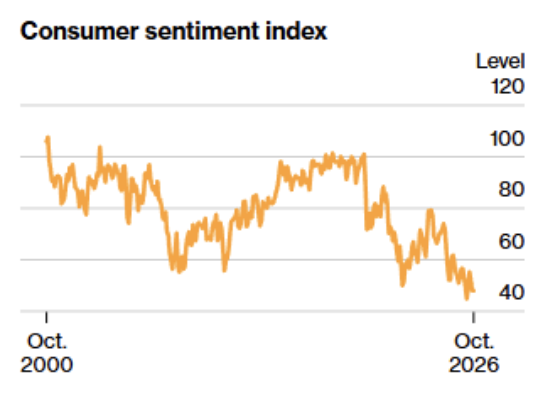
US Consumer Sentiment Index Global France, from protests, to problems for the European bond market. France's composite PMI sank to 48.4, from 51.1, indicating contraction. At the same time, its 10-year government bond yield touched 5%, the highest since 2002, so uncertainty rises while next year's elections creep closer. And this is a massive problem because last week's protests were all about improving citizens' lives: social injustice, an improvement of public schools. With growth slowing and yields increasing, it all adds pressure to a government that's already struggling to contain its massive deficit, currently sitting at a 119% debt-to-GDP ratio. Looking towards the east, it seems like the AI sell-off went global. South Korea's capital, KOSDAQ, fell 3.5%, and the KOSPI, which is all-cap, fell 2.2%. Japan's Nikkei lost 1.4%, and Shanghai fell 1.3%. Asia's markets are heavily exposed to semiconductor companies, so this suggests investors are shifting out of US AI companies, but also out of AI companies worldwide. UAE/Gulf DeskThe V-shaped RecoveryHenry de Salis Things are pretty bad in the Gulf at the moment, and they definitely got worse this week, but the IMF thinks that things will be substantially better in 2027, assuming a cessation of hostilities in the region. UAE and Saudi stocks bled into the weekend, as the war premium returned to oil, and the Houthis couldn't help themselves to their signature fatal strikes on airports. 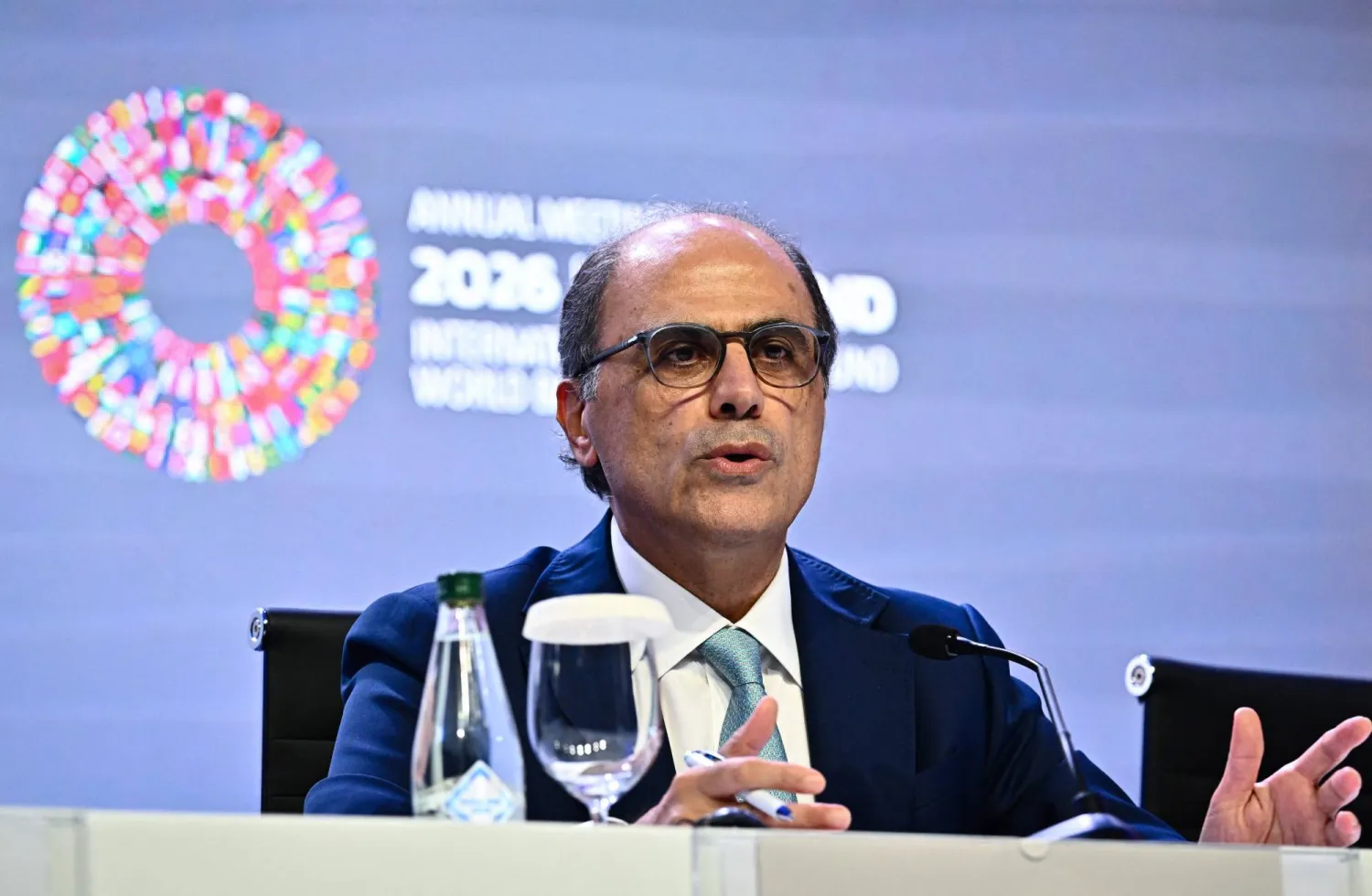
IMF Middle East and Central Asia Department Director Jihad Azour in Bangkok on the 15 of October, 2026 (AFP) What are Stocks Pricing? (Equities) Dubai fell 1.4% on Friday to a four-month low, led by Emirates NBD (-3.5%) and Emaar (-2.1%); Abu Dhabi losing 1.2% alongside the 3.7% Aldar drop. It's interesting that good news filled the backdrop in regards to fundamentals – ADCB reported a 15% jump in Q3 profit and still fell 3.7%, as ADNOC put over AED60B in local manufacturing opportunities through 2030. Abu Dhabi continues to write cheques as stocks fall, with Sheikh Khaled's Athens visit resulting in a further 15B Euro investment in Greece, on top of the 4B Euro investment announced in 2022. Dubai's property looked dimmer, as prices in prime areas dipped for the first time since 2020, with Palm Jumeirah down 9.1% over twelve months. An attack on Dammam's civilian airport killed two and a drone strike on an oil field killed two more, as Washington ordered diplomats and their families out of Saudi missions. Thursday saw the Saudi National Bank fall 5.1% and the index drop 2.3%, with it now at a five-year low. The Clock on Iran is Ticking (Diplomacy) US officials say the US and Israel have drawn up plans for a short, intense campaign after the midterms, which are on the 3rd of November. Iran told Reuters that it had plans to hit Gulf undersea internet cables if the war resumes – a direct threat to the UAE's AI ambitions. On the other hand though, Iran also discussed reopening Hormuz if the US lifts its blockade, all while Trump floats more strikes. And Commodities? (Gold & Oil) Gold slipped below $4,000 for the first time since July and had its steepest weekly decline in over four months, as oil kept inflation fears alive. The hard tech sell-off in global markets last week also prompted traders to take profits in gold, which seems to be a recurring trend whenever equities start to struggle. Oil is also pricing in difficult times ahead, with Brent at the highest in four years, alongside an oil spill in the UAE. Interestingly, Gulf oil flows are actually above pre-war levels, with bypass pipelines picking up the slack and a second UAE pipeline to Fujairah due next year. Barrels are moving, the fear of escalation hasn't. The Future: Recovery in 2027? We established a few editions back that recovery was definitely not a 2026 story, but the IMF pointed out how a de-escalation in the war could open up a strong Gulf recovery in 2027, with solid foreign investment and broader recovery. Near term, the current situation of tension is likely to hold until the midterms. The two paths are clear, a successful round of US-Iran talks could invite a relief rally for the Gulf, while strikes resuming would turn the depressed valuations into material infrastructure damage. The whole world is watching America, and what it'll do after the midterms. Read online at twodesksnewsletter.com This is not financial advice. Read our disclaimer.
Henry de Salis 
Copyright 2026 Two Desks. All Rights Reserved. |